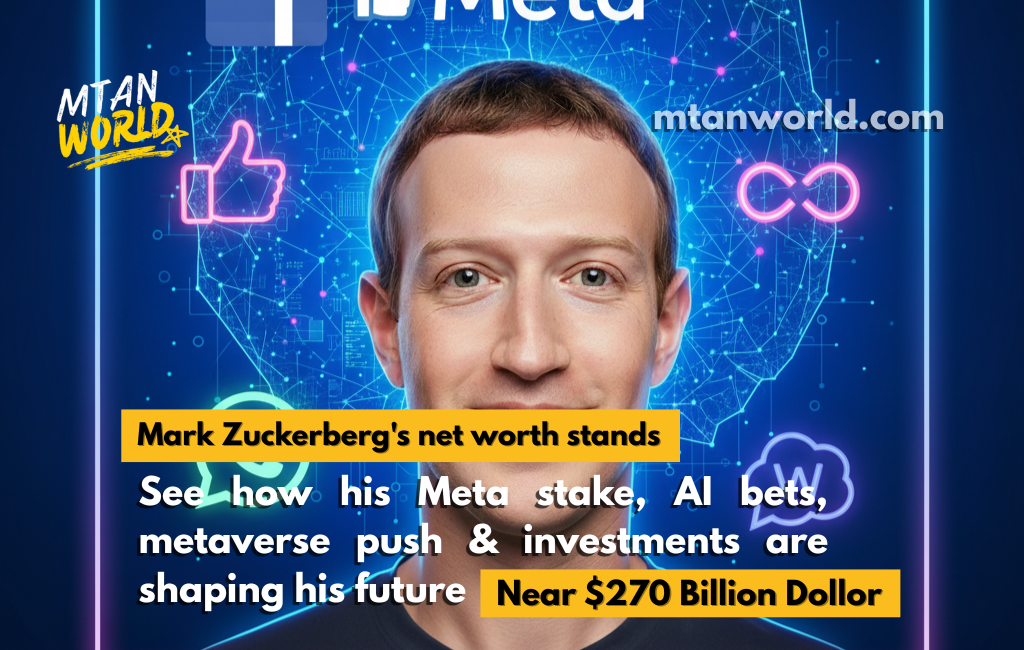
Mark Zuckerberg’s Net Worth & Meta’s Vision
1. Who Is Mark Zuckerberg
Mark Elliot Zuckerberg (born May 14, 1984) is the co-founder, CEO, and Chairman of Meta Platforms, the parent company of Facebook, Instagram, WhatsApp, and Threads. ▸ Known for the early creation of Facebook from his Harvard dorm.
2. Early Life & Founding of Facebook / Meta
-
Zuckerberg launched Facebook in 2004 along with his college roommates while at Harvard University.
-
Over time, Facebook evolved, acquired Instagram and WhatsApp, and rebranded as Meta in 2021 to reflect broader ambitions in virtual reality, metaverse, and beyond.
3. Current Role at Meta & Major Responsibilities
-
As of 2025, he continues to serve as CEO and Chairman of Meta Platforms. He guides Meta’s strategy around AI, VR/AR, infrastructure, privacy, and regulatory compliance.
-
Meta is investing heavily in data centers, superintelligence labs, and developing hardware like AR/VR headsets.
4. Net Worth Estimates (2025)
-
Forbes Real-Time places his net worth at approximately US$266.4 billion as of Sep 2025.
-
Bloomberg Billionaires Index estimates are around US$273 billion, reflecting fluctuations in Meta stock and market trends.
-
Benzinga reports roughly US$270 billion, largely due to Meta equity.
5. How His Wealth Is Distributed – Meta Stock & Other Assets
-
The vast majority of Zuckerberg’s wealth comes from his holdings in Meta – around 13% of Meta stock (Class A & B shares), per public filings and securities disclosures.
-
Other assets like real estate holdings (Palo Alto, Lake Tahoe, Washington DC mansion etc.) represent a much smaller fraction.
6. Recent Statements & Strategy – AI & Superintelligence Focus
-
Zuckerberg has said that he’d rather misspend hundreds of billions than be late to the rise of superintelligence. He sees AI as one of the most transformative forces and is pushing Meta to invest heavily.
-
Meta plans massive infrastructure build-up (data centers, specialized labs) through 2028 to support AI ambitions.

7. Meta’s Investment in Data Centers & Infrastructure
-
Substantial capital is being allocated to build out data center capacity and computing infrastructure. This is essential for AI training, cloud services, and supporting new VR/AR devices.
8. Metaverse & Hardware Efforts (VR/AR, Quest, Ray-Ban Glasses)
-
Meta continues pushing on metaverse vision — Quest VR headsets, Ray-Ban Meta smart glasses (with visual overlays), wristband controllers etc.
-
Despite significant investment, hardware division Reality Labs is still losing money (large losses reported in first half of 2025). Meta is betting on long-term returns.
9. Public Perception & Criticism
-
Some view Zuckerberg’s investments as visionary; others criticize the financial losses and lagging adoption of metaverse products.
-
There are concerns about privacy, safety, and regulatory oversight in Meta’s VR/AR and AI ambitions.
10. Regulatory Challenges & Privacy Issues
-
Meta faces tightening regulatory scrutiny around data privacy, misinformation, content moderation, and market power.
-
Lawsuits and legislative pressure in the US and EU continue to be relevant.
11. Real Estate & Personal Holdings
-
Zuckerberg owns luxury properties in Palo Alto, Lake Tahoe, Washington, D.C., and has made several high-cost property purchases.
12. Philanthropy: Chan Zuckerberg Initiative & Education Projects
-
Alongside his wife, Priscilla Chan, Zuckerberg runs the Chan Zuckerberg Initiative, focusing on health, education, scientific research, and influencing policy.
-
He’s also participated in funding schools and similar educational initiatives.
13. Comparison with Other Top Billionaires
-
According to an article from Business Insider, combined net worth of the top three richest individuals (Elon Musk, Larry Ellison, Mark Zuckerberg) has crossed $1 trillion. Zuckerberg holds around $269 billion, placing him third.
-
His rank and wealth fluctuate depending on stock market performance and competitors’ gains/losses.
14. Future Outlook & What to Watch
-
How AI / superintelligence strategy plays out — Meta’s ability to turn losses in hardware divisions into profits is important.
-
Regulatory actions in US/EU could impact Meta’s operations and valuation.
-
Consumer adoption of VR/AR products and metaverse platforms will be a key measuring stick.
-
Meta’s investment in infrastructure and labs through 2028 will affect cost structure and potential returns.